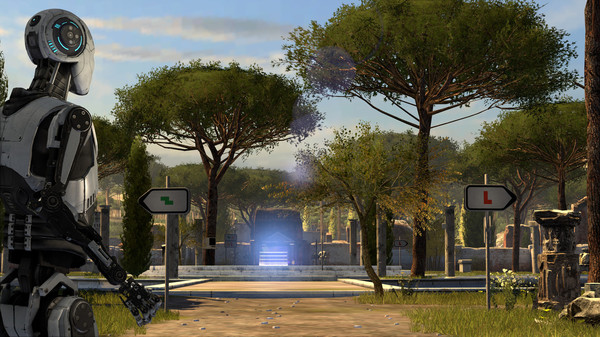
Wednesday, November 23, 2016

Giving Thanks + New Mixed Reality Photo

Tomorrow many people in the US will be celebrating the holiday of Thanksgiving. Regardless of how it started, it is now a time where families and friends gather together to say "thank you" for everything they are grateful for. For us at White Lotus, we are thankful for so many things.

We are thankful for...

  • All of our Kickstarter backers, who believed in us and helped launch us on this amazing journey. We are starting to see the light!
  • Our parents, who have continued to support us though all of development.
  • Our friends and other family members, for putting smiles on our faces; who have been there for us through our ups and downs, and given us comfort and words of advice in times of need. 
  • Our professors and teachers, like Vinnie Morrison, who inspired us to achieve more, and not to settle for just "good enough" in our work.
  • All of the people who work at Epic Games, for continuing to improve upon and make using Unreal Engine 4 a great experience for all developers, including smaller ones like us.
  • The software that we use, such as Photoshop and Cubase, for just existing, and allowing us to achieve our visions to make digital art and music.
  • All the past and present game developers, who carved the path, and who continue to inspire us with their amazing games!
  • Our supporters who follow us on social media, and who help us share our latest updates, or simply write us kind words and comments. It means so much. 
  • Our health, because there would be no way we could do everything we do on this game without sound minds and bodies to do it all with.

Happy Thanksgiving from James, Koriel, and John :D
(Photo from GDC 2015)

We hope that everyone giving thanks tomorrow tries to look at the positives in their lives, and keeps motivated to live their lives to the fullest. :)

Also, before we let you go, here is the newest addition to our Mixed Reality photo series
featuring XING: The Land Beyond!


Thank you for reading, and have a wonderful rest of the week!


Monday, November 14, 2016

Graphics in XING + The Bright Side of Delays

Hello, John here!

For my blog post today I'm going to ramble about some of the development process we are going through, as well as some of the tougher problems I'm working to solve. I'll also address the ongoing delay of the release.

First, a quick update on development. I've recently been busy integrating the changes made in Unreal Engine 4.14 to our custom 4.12 build specifically to better support the ever changing SDK's of all the VR headsets we are supporting, as well as for a few other nice improvements to the editor. Our friends at Cyan were the ones who really encouraged us to mess around with the engine itself to better suit our needs, and while it's initially a daunting task I'm really happy I dove into it.

We've actually cycled our entire project from engine version to engine version since the original 4.0 release, and getting my hands dirty with the engine code is certainly helping me better understand some of the "magic" that makes up Unreal.

Rainforest Landscape Material

The specific changes I've made to the engine are mostly small, but important for our game. For example, I modified the code used for saving the game on PS4 to run on an asynchronous thread, meaning the game saves without hitches or pausing. Doing this change opens up the opportunity to have saving run in the background and not rely on breaking gameplay to save the game. Of course, having background saving presents the problem of how to let the player know their game is saved - something we'll need to address at some point.


Anti-Aliasing

Another important change I've made is modifying the internal Screen Space Ambient Occlusion (SSAO) shader to apply a simple full screen blur for use with Fast Approximate Anti-Aliasing (FXAA). This is essential for avoiding the strange dither pattern on SSAO when we are rendering without Temporal Anti-Aliasing (TAA).


Speaking of AA (anti-aliasing, or "removing jaggies"), I've decided to stick with FXAA as our primary AA solution. While TAA has some awesome strengths and really can completely remove aliasing in a lot of cases, the ghosting and Vaseline effect it gets criticized for in modern games like Fallout 4, as well as adding a slight rendering cost on lower end hardware, has led us to defaulting to FXAA. I'm not sure if we'll be offering TAA as an option as it currently breaks a couple of shaders, but you will certainly have the option to disable AA if you like, as well as super sampling the game if you have the hardware for it.
Scaling Cloud Shader

Graphics Settings

Graphics settings are an interesting point of discussion regarding PlayStation as well. While I've seen a few titles offer some settings to players in the past, it seems like more and more games are giving players some presets to play with on consoles - things like sacrificing frame-rate for resolution and vice versa. I'm honestly not sure what we are going to offer on that note.

All of our demos on PS4 so far have been 1080p unlocked frame-rate that sticks pretty close to 60 at all times, but to be fair we've been mostly demoing some of our less-demanding content. I personally prefer the game to be running at 45+ fps - any less and I start to "feel" the frame-rate, but I know some people strongly prefer 60 fps, even if it means sacrificing quality. I'm not super keen on providing a 900p setting, although I think a lot of games are 900p and most people don't even notice. Interestingly, another puzzle game (The Witness) decided to stick with 900p to lock the frame-rate to 60 on the PS4.


Profiling
Obviously the PSVR has a strict frame-rate requirement that we are required to hit, and to do so there is certainly a hit to post process quality and scene detail. I'm not gonna lie to you and say all these screenshots you've been seeing are coming straight off of a PSVR - the settings are noticeably dropped to maintain frame-rate (not to mention VR photos are pretty unsightly at the moment - I wonder if we'll see a better solution to that in the future?). In the interest of transparency, here's some work in progress photos demonstrating what some of the scalability settings will look like.

Work in Progress - High Preset
Work in Progress - Medium Preset
Work in Progress - Low Preset

Conclusion

On a concluding note, I'm very much interested in making sure XING is an extremely polished experience no matter the hardware you are playing on. I hope this attention to detail somewhat alleviates the admittedly extraordinary duration some of you have patiently been waiting for.  The scope and reach of this project has FAR exceeded my expectations setting off, for better or for worse.

But don't worry, this multi-year delay has some fantastic benefits for you, the player:

  • The game has about four times the content than we had initially designed
  • Voice-acted characters
  • A massive set of optional puzzles and content
  • Literally three years of polish
  • A completely ridiculous amount of art for a 3 person indie team to try to push out
  • Way too much music - levels that were going to have one track now have 4+ with variation
  • PS4 support
  • Support for the three major VR headsets, including tracked hand controllers
It's been a long wait, and because we still have a lot of unknowns ahead of ourselves there no point in specifying a target date. What I can say is we are very far along - things have never looked better for the future of the project, and we are in no way in any danger of disappearing. We've all worked extremely hard to get to where we are now and we will continue to do so until we are happy with the entire package we are releasing to the world.


Wednesday, November 9, 2016

Obduction - From the Perspective of an Adventure Game Developer

Early last week the independent game developer Cyan released a virtual reality version of their latest creation, Obduction, into the wild. This marks Cyan’s first foray into VR and a departure from working on sequels to their acclaimed Myst series. Obduction’s game design and atmosphere feel deeply rooted in the company's previous work, yet remain feeling fresh and wholly original. Instead of writing about our game XING’s development directly, this week I will be doing so through the lens of the release of Obduction.


Gamers have seen the release of many great puzzle and adventure games in recent years, including The Witness, Firewatch, The Talos Principle, and Monument Valley to name a few. Despite the emergence of so many titles which credit Myst as an influence for their game, there is actually a significant lack of a pure Myst-style game design actually deployed in these games. That is to say, there are few puzzle games released which stick to the original formula of Myst, which features what I’ll call world-scale puzzle solving, as opposed to room-scale puzzle solving. I’m not talking about room-scale VR here, I’m talking about the scope of puzzles and how they are presented to the player.

Standing Apart from Modern Formulas


Among the modern puzzlers I mentioned, possibly the most unlike Obduction is The Talos Principle. In Talos, the player is presented with multitudes of puzzles at a time, and the player can solve them in any order. In Obduction, the player seemingly has only one objective to do at a time, or perhaps the player is still trying to figure out what that singular objective even is. At a macro level, the player is rarely wondering what they should be doing in games like Portal or The Talos Principle. The finite puzzle solution may not be ascertained, but the player at least knows which door they are trying to get through. The player is confined to a “room” and must unlock that room. This starkly contrasts the core world-scale theme of Cyan’s design vocabulary, which the company has fine tuned in their latest release.
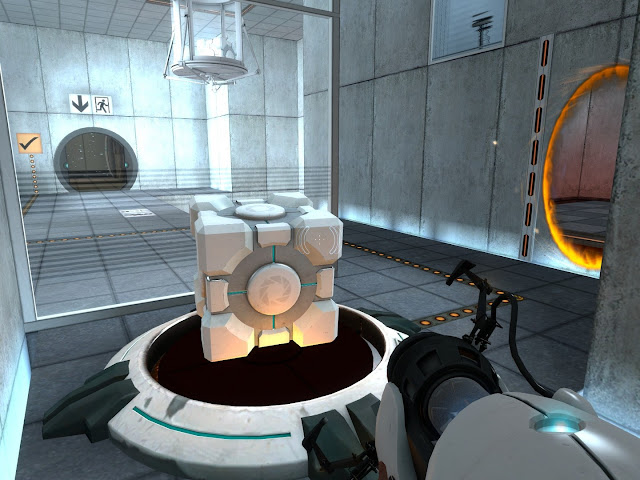
Screenshot from Portal

Screenshot from The Talos Principle
In Obduction, the metaphor for room-sized puzzles doesn’t exist, and instead the entire game world is the puzzle. Pulling a lever or uncovering a secret code may unlock a door for you on the other side of the game’s universe. This not only contrasts The Talos Principle but also other modern puzzle games like The Witness and even Monument Valley, which each confine puzzle-solving to specific zones. While The Witness also has some larger world-scale puzzle solving that, along with an island setting that really harken it back to Myst, Obduction relies on world-scale puzzle solving exclusively. By doing so, Obduction easily distances itself from these modern formulas, yet remains deeply compelling.


The narrative-adventure game Firewatch tells its story across an expansive game world like Obduction, but without traditional puzzle solving, and instead, allowing the player to explore and observe the story in their own way. Both games use visual spectacle as a way to reward the player for making progress, and utilize the environment as a storytelling device. A desire to see the next vista also becomes a driving force for the player in our own game, XING: The Land Beyond.
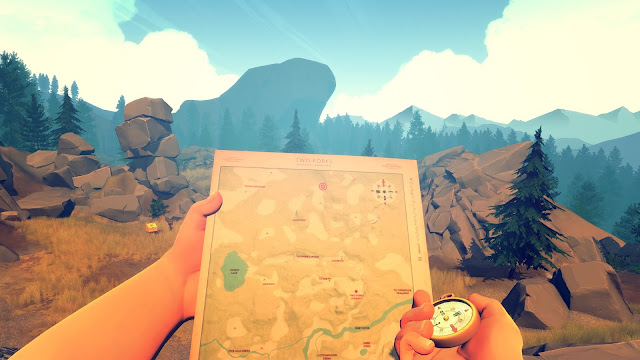
Screenshot from Firewatch

Differences with XING


While the formula for XING has evolved over the course of development, we can still look back to our Kickstarter days and see how the initial seeds of design naturally grew into what the game is today. You can absolutely point out aspects of XING that are reminiscent of Portal, The Legend of Zelda series, Golden Sun, and yes, Myst. XING features a hub world and a collection of lush and diverse outdoor environments, but perhaps the similarities with Myst end there. More akin to Portal, we linearly introduce game mechanics and puzzles, which are typically confined to specific zones. Influence from The Legend of Zelda franchise, especially the dungeon design of Ocarina of Time or Majora’s Mask, can be seen in the effort we have put into creating novel puzzle moments crafted for unique environments. This idea of uncovering novelty became important for XING, and seems universal to all adventure games.


I have been playing through Obduction on the Oculus Rift without looking at guides or hints, and the experience remind me of the magic of earning discoveries. Our development team is careful about releasing screenshots of new content or talking about puzzles, as we know those moments of surprise are special for gamers. We are continuing to polish up those special moments in preparation for what we hope will be a novel and memorable experience for gamers. Stay tuned!

Monday, October 24, 2016

Quick Update + Mixed Reality Photos!

Hi everyone!

Koriel here. Just a quick update since we have a lot we are trying to get done right now!

Update


John has been off in music land these past few days (working on a bunch of sweet tracks for the game). The new music pouring in is getting us all pretty excited. :D

James is working on integration for VR platforms. There are still a lot of adjustments to be made to get everything feeling right on the Rift, the Vive and PSVR.

I've been mostly working on getting into better shape, improving and creating some art assets, and finishing up some in-game text.

Mixed Reality Photos


Some of you may have seen our fun Mixed Reality photo posts over the past weeks, so I thought it would be nice to put them all together in a post. In these photomanipulations, using both the Oculus Rift and HTC Vive, we try to capture the wonder and thrill of playing XING: The Land Beyond in Virtual Reality.

We still have more to come, but here are the newest two, plus all the other posted so far!

Be sure to follow us on Facebook or Twitter to see the new releases each week :)

NEW:

Photo 11: "Sakura"

Photo 12: "No Sunscreen Required"


The Rest:


Photo 1: " Lost in the Jungle"

Photo 2: " The Flaming Durian"

Photo 3: "Crouching Lilypad, Hidden Rainforest"

Photo 4: "Virtually Snowing"

Photo 5: "Tablet on the Beach"

Photo 6: "A Flurry of Petals"

Photo 7: "Moon Path"

Photo 8: "The Hungry Tadpole"

Photo 9: "Pinecone Pickup"

Photo 10: "Desert(ed) Towers"

More to come!

Thanks for reading, and as always, have a lovely week!

Koriel


Monday, October 17, 2016

Music and Game Development

Welcome back to another XING Development experience. John here - it's been a while since I wrote on the blog, so I figure I'd update everyone on some of the work I've been up to. We are returning from a few XING related events this past week, namely the annual IndieCade (this year at USC) and the biennial Steam Dev Days in Seattle, so I'll give a quick recap of our travels as well.

Steam Dev Days


Going to events like Steam Dev Days feels like one of the most effective ways to refresh our development and keep us looking at the big picture. Despite our best efforts, we are still a relatively isolated company and can sometimes find ourselves working in a vacuum, so getting out and socializing with a ton of developers, seeing talks about gamedev, and having in-depth meetings with our partners can really help revitalize development.

Arriving in Seattle
Keynote about to start!
The Main Session Room
Lunch Day 1
After Party/Mixer hosted at the Convention Center by Valve
Staying until the very end. We made some friends :)
Unreal Slackers group photo!

IndieCade and PlayStation VR


Sony graciously hosted XING: The Land Beyond at IndieCade this year, and alongside their usual IndieCade setup they crafted an excellent PS VR demo station for us in the Steven Spielberg Building. This help was especially useful for us this year given the nearly overlapping dates between IndieCade and Dev Days this year! This was the first time we've shown XING on PS VR to the general public. Maintaining feature parity along all of our platforms has been a huge priority for all of us, so seeing people lining up to play our game on PS VR hopefully is a good sign for XING and the platform in general. Shout outs to the other PS VR games: GNOG, Psychonauts: In the Rhombus of Ruin and Headmaster for joining us this year!

And of course, happy PlayStation VR launch!

Koriel goes to IndieCade
People playing XING: The Land Beyond on the PS VR
More lovely games in the PS VR room :)

Development


Last week we were able to make great strides on a number of important elements for the game. As Kori mentioned two posts ago, we have a "full" build of the game - meaning all of the levels are present in a single executable. What we don't have, and what we've been working on, are the transitional elements between content; things like a cohesive way to introduce new players to the game and letting them understand some of the core objectives they will want to accomplish during their stay. Some of this work is strictly polish, like refining level design, but much of it has to be treated like new content. We've added a new introduction sequence and area into our latest internal build, and will be looking for feedback this week.

Checking things in and out of  Perforce Source Control
Personally I always have 50+ tasks I could be doing at any moment, so I like to use some time at the beginning of each week to set some goals for production. Sometimes I'll need to prioritize tasks based on events, like getting the PS VR build prepared for IndieCade, but usually I'll try to group my work together based on what discipline it lies in. I tend to get into a "mode" of working on a particular type of task; last week it was mostly post-process and shader work, and before that was systemic programming. This week I'll be focusing on music.

Music


Making music for a game I also need to be actively developing has proven to be a challenging mix, no pun intended. It's a catch 22 - on one hand, I need to make the game function before I can write the music; on the other hand, the game needs music to function. I often tell people I feel like I'm not spending enough time writing music for the game, but in reality it's going to take as long as anything else - we won't release until it all works.

My Library
I think structurally XING's soundtrack it shaping up to be a somewhat unique experience. In an era of ambient, moody soundtracks that expertly combine descriptive soundscapes and lush atmosphere, I've decided to look to the past and tackle the soundtrack with a more thematic approach. Locations have their own recurring motifs and instrumentation, with persistent melodies tying the tracks together.


Deciding on the fidelity of the music was also an interesting choice. While there are obvious economic reasons why taking a 100% live audio approach may not be the most appropriate option, I'd argue that a MIDI centered soundtrack actually grounds the project closer to it's nostalgic first-person adventure roots. That's not so say that the entire soundtrack is programmed MIDI - many of the tracks feature a live instrument or two, or a live preformed midi instrument (for example a piano). Ultimately I would say I'm targeting a fidelity level similar to Donkey Kong Country Returns, Fire Emblem Awaking, and A Link Between Worlds - all do a great job feeling modern with their production while still retaining the "retro" vibe of their predecessors.

Making Music


As we get closer to release we'll start revealing more of the soundtrack, but for now you can listen to some of my work for the game in our various trailers and gameplay videos.


Until next time!

John

Monday, October 10, 2016

Thoughts on OC3 and Heading to IndieCade


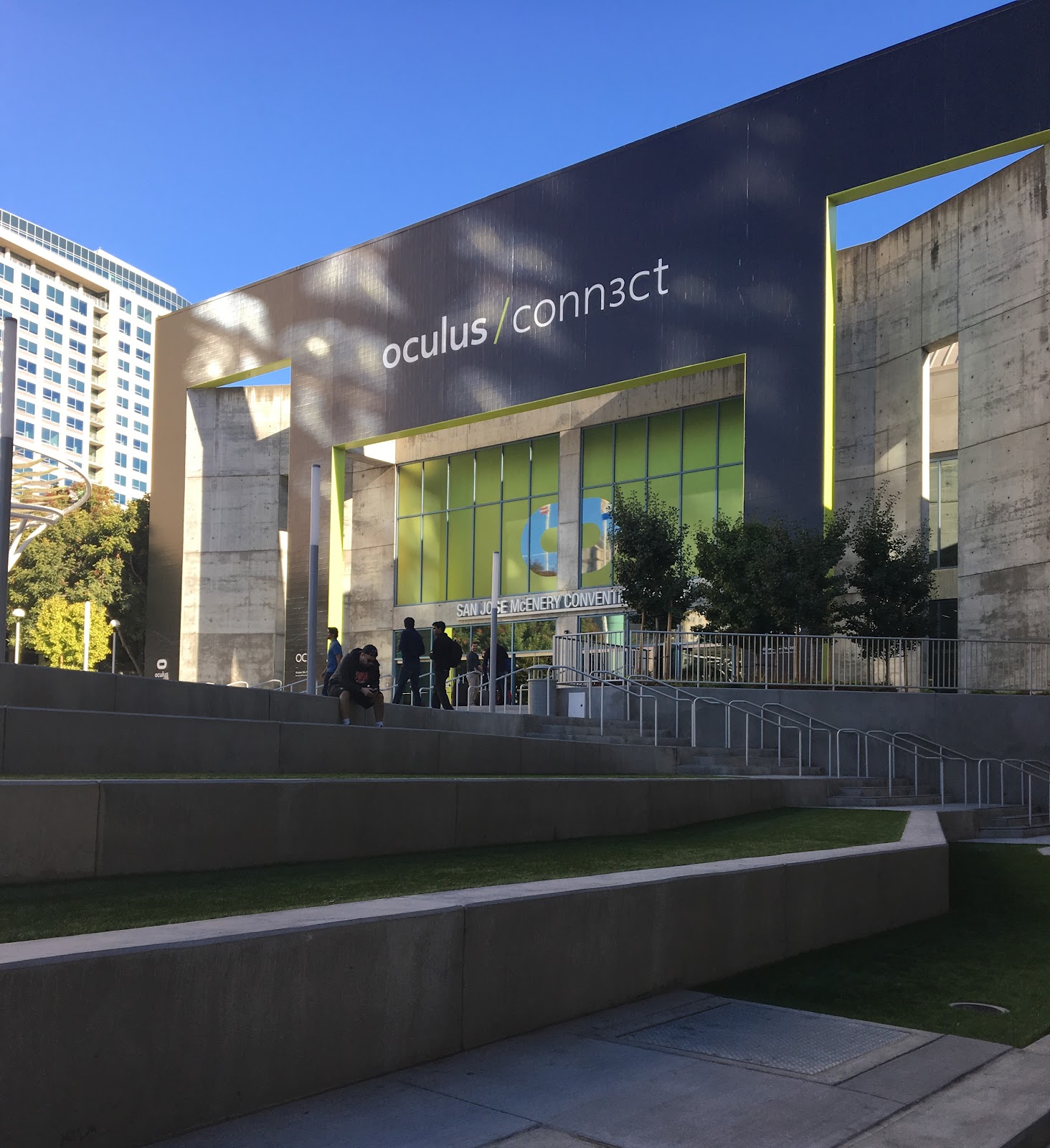
James here for our weekly development post! This last week I was fortunate to attend Oculus Connect 3 at the San Jose Convention Center in the center of Silicon Valley. Having grown up in Santa Clara, a mere 15 minute drive from San Jose, I felt very much at home attending this conference. This meant that I knew to head to a Philz coffee before heading to the conference.

They must use magic beans to make coffee that good!

VR Software is Leading the Way

The underlying theme of the event seemed to be proving that great software experiences are eminently important to helping VR go mainstream. The hardware across many VR platforms is stupendous, and now it is up to us developers to make experiences which sing on those platforms. While improvements and optimizations on the computational and SDK side are going to allow developers to push more impressive graphics over time, we have only scratched the surface of what kinds of experiences are possible on existing hardware. 

In between talks and meetings I was able to try out some of the latest and greatest VR titles. Especially memorable was the multiplayer mode of Lone Echo, which I’ll describe as a cross between the epic zero-g combat of Ender’s Game combined with the Quidditch-esque goal of scoring by throwing a disc into a hoop. Another wonderful multiplayer experience I got to try was Eagle’s Flight, in which players warg into the perspective of the titular eagle and fly over Paris while playing capture the flag against other soaring eagles. 
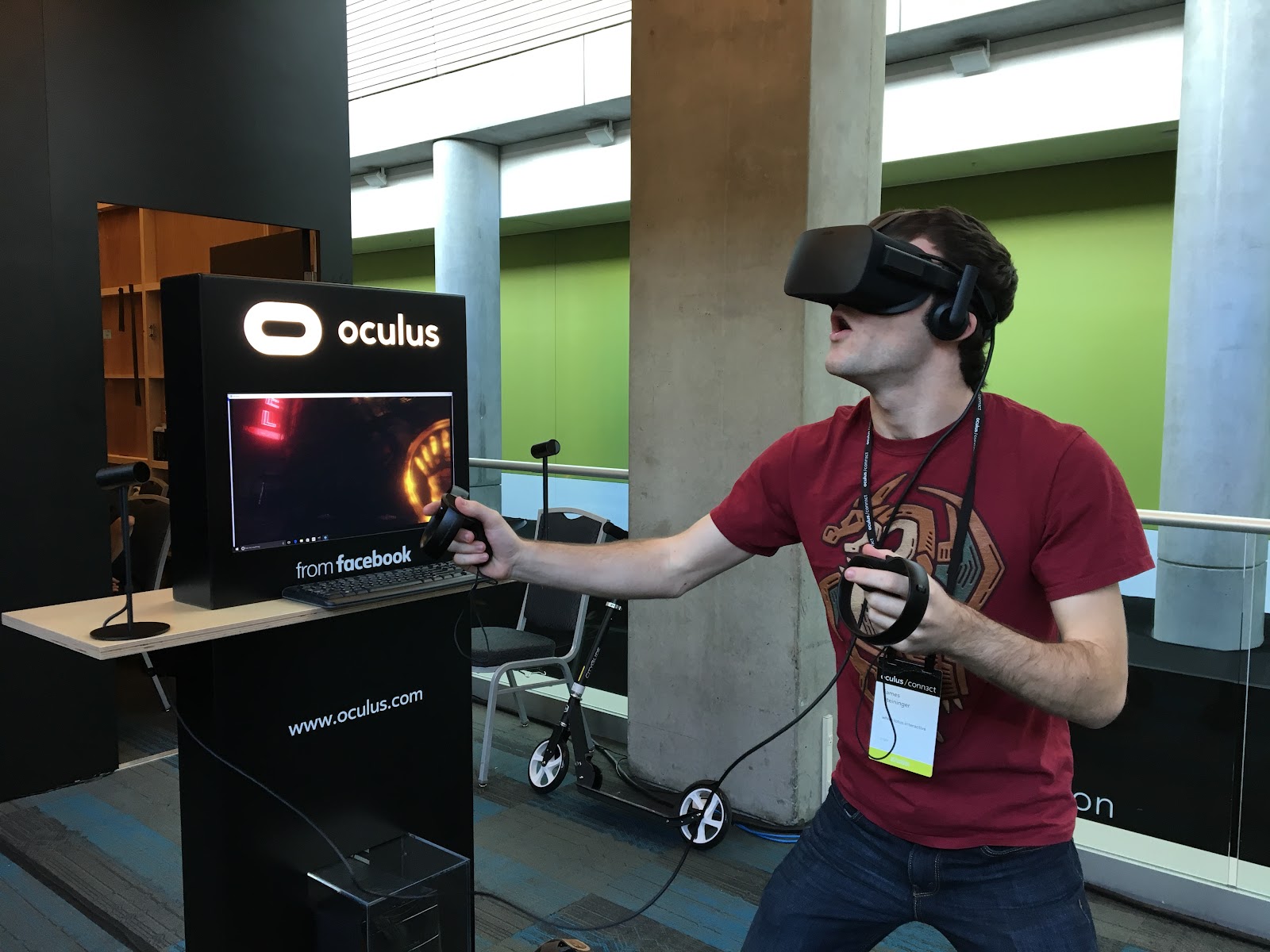
Classic "VR face"
Most impressive to me were the improvements brought to Oculus Medium, a sculpting tool which demonstrates that 3D modeling can be accessible and fun with the right tools. The three founding members of White Lotus Interactive, myself included, first learned how to use 3D tools while attending Chapman University in Southern California. One of the skills that must be learned to make 3D art is how to move around and inspect your model or scene. So far, the tools typically used to do so include a mouse, keyboard, and a 2-dimensional monitor. Students must become adept at keyboard shortcuts and operations to even look at or edit their model. This is not the case in Oculus Medium. What VR headsets and hand controllers allow for is direct and lifelike inspection of a 3D model. Instead of rotating your viewport 180 degrees to look at the backside of your model, you just....move your head and look at the backside of your model! It’s seriously magical.

I made this dragon in just a couple minutes!
How does our game XING: The Land Beyond fit into the picture? By fully supporting motion controllers, offering multiple locomotion options, and supporting seated or room-scale play we are prepared to give players an excellent VR experience. We implemented these things so that players are comfortable in VR and hopefully able to forget about the hardware, and just become engrossed in the experience. Having now finished making most of the tough decisions on designing for VR, what remains is shipping a quality game that speaks for itself. 

Presenting at IndieCade on PSVR

This coming Friday gamers will be able to play XING: The Land Beyond at IndieCade in Culver City, which lasts October 14-16. Although XING can be played using a tracked DualShock controller on PlayStation VR, at IndieCade players will be able to use the Move controllers to engage with the world directly. 

Koriel will be heading to IndieCade on Saturday, so make sure to stop by and say hello if you’re attending! 


Monday, October 3, 2016

Starting a Weekly Check-In Post!

Hi All!

So for those who have been following us, you may have noticed our dev blog update posts have become fewer and more far-between over the past year. This is partly because we were working so hard on development and trying to finish the game that we aren't scheduling time to make posts, and partly because as we get closer, we were worried about spoiling any parts of the game trying to look for things to post.

A New Calendar for Posting Online


However, we recently hired a great guy to help us out with PR and Marketing named Alex Payne. He laid out a posting schedule and plan for us for the coming months to follow, so that we can be more transparent with our followers, and connect more with everyone who is interested in the game! He's given us a lot of suggestions about things that we can post that will be mainly spoiler-free: things like cool in-game assets we have made to display and showcase, holiday-themed posts, sharing images and technical achievements on Twitter, and a weekly blog update that will come out every Monday (starting today!).

Marketing an indie game is pretty tough, and we've read a lot of post-mortems on what other indie devs have tried. Some were successful, others were not. We hope to be in the "successful" list as we inch closer to our release. That means spending more time on engaging with you guys, our readers, while also maintaining a constant flow of energy and work on the actual game itself.

Transparency


In the spirit of being transparent, here are some things we just want to say:


1. A Full Build!

    • We have recently made a full build of the game, which we have had close friends and family members play from beginning to end. This means that pretty soon (probably within the next 2 months) we will be going into our Private Beta phase, where we will have our Kickstarter backers who backed for the beta get to play the game and give us their feedback.
    • This is an exciting and scary time, since we will be allowing people we don't know at all, and can't watch over have access to the game in the state it is in. As a developer, it's a tough thing to trust in other people to not share your work on YouTube or anything else like that before it is completed, since there is always that risk, even with NDAs. We haven't spent all this time trying to make it amazing to then have it be shared before it's ready. However, the exciting part will be gaining new perspectives on the overall feel and structure of the game that are not friends or family, or people at conventions who we can meet and watch play. 

2. Polish

    • While having a full build of the game is super exciting, it doesn't at all mean that it's done. We have 4 sections of levels that still need quite a bit of work, including the final level, along with a bunch of polish work that needs to be done. 
    • This polish work includes things like making sure the materials on objects are seamless (so that unsightly seams don't break the immersion), adding sound effects for everything, general bug fixes, testing all of the collision, vertex painting models all over the levels to mask repetition in textures, adding particle effects to EVERYTHING BECAUSE THEY ARE AWESOME, and making sure that the story flows and makes sense now that the pieces are in place.


      Particles!

3. The Game Maker's Path

    • For us, making this game was never a perfectly set path with steps to follow to completion. 
    • We've learned and grown a ton as we've made more and more advancements in overall game design, as well as both visual and written narrative. Everything we do is basically learned from what we can find online - tutorials, picking apart how other people made things, and making our own tools to aid in development. 

4. Visual Look and Style

    • Our style has changed bit by bit over the past 3 years of development. I made a graphic showcasing this change about a year and a half  ago, and now I'll show you where we are today. 
August 2014
October 2016
    • This change has a lot to do with the new technologies for rendering things that are being made on a daily basis, as well as our own growth and knowledge. John is our main Tech Art guy, among many other things, and he is always trying to make sure the visual quality of the game is where we want it. Sometimes it's tough to keep up with the times, since the longer it has taken us to make this game, the better graphics have become. Our goal is to have XING be a beautiful, immersive and modern-looking game the day it comes out.

5. Company Face

    • Every company has a face that it shows to the world, and ours has been no different. Some people might be annoyed at the PR and Marketing agenda that lies behind the face of all these companies, because very few companies show "who" they really are. Of course, it makes sense not to give away everything you are doing at your company, as a lot of things are under contract not to talk about. However, we want to be different. 
    • The three of us - John, James and I - all want the world to know who we are and what we really think. The three of us make up White Lotus Interactive, and so far I don't think we've done the best job at showing our true characters. That's why each of us will take turns writing these dev blogs, in the hopes that you will see the different "faces" of us, and how we work together.

    • How do we work together? On Google Hangouts, 6 days a week. 11am to 11pm Pacific time. Some days with bigger deadlines run longer, of course, but we mainly stick to that schedule.
    • We try to examine all the possibilities and solutions to issues, especially when we don't all agree. Sometimes we have to just sit down and discuss what we each think are the most important things to be working on, and how we each think any part of the game feels at any given time. Since we are all equals in making this game, nothing big really gets decided on until the 3 of us can come to an agreement on it. This differentiates us from most studios, with a set structure for leaders. 
    • For us, we are all 3 leaders, and all 3 followers. In the hopes of making a better, more well-rounded game, we will hold discussions on issues ranging from color choice (mostly my area) to how we should best integrate Virtual Reality for motion controllers or locomotion. Yeah, that's been a big one. (We were glad our solutions we presented in our last post [link] pleased almost everyone who commented. That took a WHILE to decide on.)

6. Us

    • Since starting the game in college, the 3 of us have worked our butts off making this game. We pour our heart and souls into making it everything we envision.
    • We each still live at home with our parents, while most of our friends have already moved out and taken jobs at larger companies. Our situation has added some strain on our families. I'm currently 25 years old, and it's both wonderful and frustrating to be still living at home. Wonderful because my parents still take care of me, while I pay a small rent with my bills each month; frustrating because I really want to be out my own, with my own place, my own food and my own curfew ><. 
    • Money has been a challenge for us, but fortunately we were able to get 2 company loans earlier this year that are making it possible for us to continue working as we do. 

7. The Future After XING

    • It's hard to talk about the future, when we aren't sure what it will hold for us. Whether XING: The Land Beyond is successful or not is obviously a large factor for the 3 of us. And by "successful", I mean allows each of us some mobility after launch. We want to touch as many people as we can with our game, but I would also like to move out of my parent’s house and maybe even have an actual office instead of my bedroom. That would be nice. So while we plan to offer support in the form of patches and bug fixes post-launch, we can’t speak too much about our plans after XING releases.
    • If people end up liking, or even loving what we've done, and we can make a living on continuing to make games, that will be success. 
Hopefully, posting more often and being more transparent will help us connect to you guys better. More news to come. Feel free to leave us comments!